
Community Detection and Modularity
In the context of community detection in complex networks, which of the following statements most accurately describes the "resolution limit" inherent in modularity (Q) optimization? Answer Options: A. The resolution limit refers to the inability of the Girvan-Newman algorithm to efficiently recalculate edge betweenness in large-scale networks, thus preventing its practical application. B. The resolution limit refers exclusively to divisive methods, indicating that iterative edge removal always fragments the network into individual components before a maximum of modularity can be achieved. C. The resolution limit is an artifact of the configuration model used in the modularity formula, causing the method to fail to detect small communities, even if they are strongly internally connected (such as cliques), favoring their merging into larger communities to maximize the overall Q. D. The resolution limitation states that modularity (Q) will always assign a negative value to any ...
Questão interessante, mas deixa muitas dúvidas. O que é um semantic path? O grafo é orientado? Como saber se uma caminho é semanticamente incosistente? E outras.
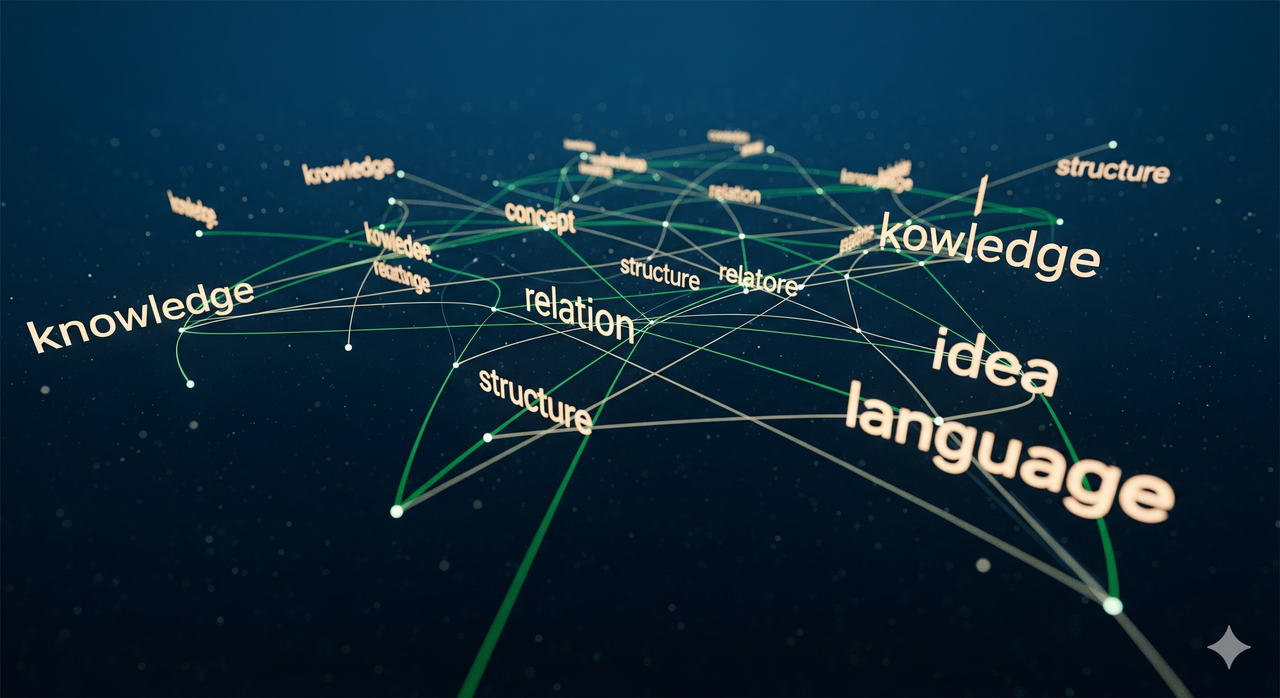
ResponderExcluirA semantic path is a trail of nodes and edges in a graph that represents a sequence of concepts connected by a logical relationship. In simple terms, it's a "story" that links ideas in a text or a knowledge system. Each node is a concept (such as "cat" or "mammal"), and each edge is a meaningful relationship (such as "is a type of").
ExcluirIn most cases, semantic graphs are directed, meaning that relationships only go in one direction. For example, the relationship "is a type of" goes from a specific concept ("Puma") to a more general one ("Feline"), but not the other way around. This direction is key to the path's meaning.
A path is considered semantically inconsistent when the chain of relationships it represents lacks logic. This can occur if the path violates the rules of the knowledge the graph is modeling or if it leads to an absurd conclusion. Inconsistency is a sign that the relationship is not valid in that context.
A semantic path becomes inconsistent when the "story" it tells in the graph doesn't make logical sense. This happens for three main reasons: The path links concepts that can't be related in that way. For example, if you go from "living thing" to "inanimate thing," the path is illogical, since a living thing can't be inanimate; The path forms a circle, which is invalid. A path from "dog" to "animal" and back to "dog" could be inconsistent if the return relationship doesn't make sense; The graph has predefined rules, and the path breaks them. A path that doesn't follow these rules is considered invalid, often indicating an error in the data.
ExcluirGenerally, the graphs used to represent semantic relationships are directed. This is because relationships between concepts are often unidirectional. For example, the relationship "Puma is a type of feline" is directed, since it cannot be inverted to say "Feline is a type of puma." Directed edges capture this asymmetry inherent in many semantic relationships.
ResponderExcluir